
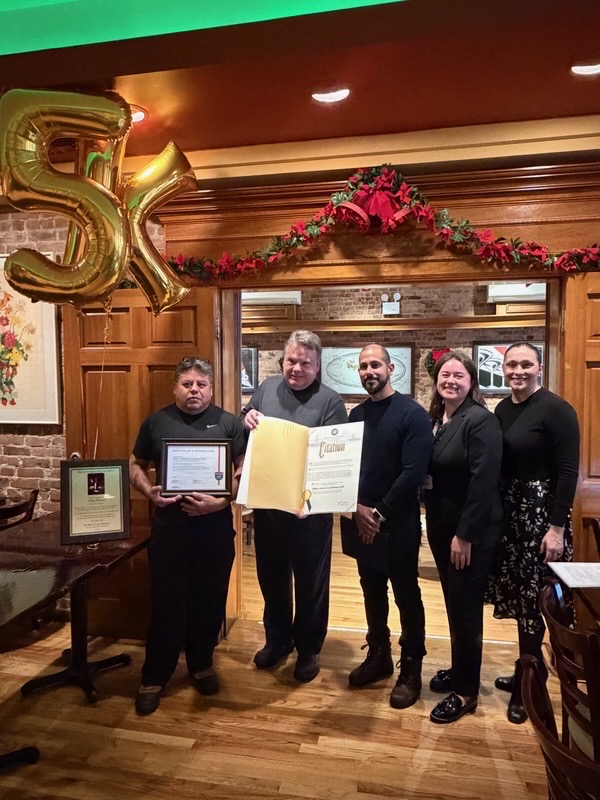
New York Blood Center (NYBC) celebrated partners at Brooklyn’s Greenhouse Café on Monday, December 29, as they hosted their 81st blood drive in memory of Haley Daquara, who passed away at the age of ten from a rare disorder called Hurler Syndrome after many surgeries and blood transfusions. The Daquara family and friends, lovingly referred to as “Haley’s Comets,” have been organizing blood drives since 2009 as a heartfelt way to thank those who donated blood and helped extend Haley’s life. The blood drive will also celebrate “Haley’s Comets” extraordinary 5,000th blood donation. The blood drive and milestone celebration coincide with a critical time, as blood donations typically decline during the holiday season and winter months.
Haley was born with a rare disorder called Hurler Syndrome, which means she did not have enough of a specific type of enzyme in her blood to break down the fats and sugars she needed to survive. Haley’s condition resulted in her needing a stem cell transplant, three open-heart surgeries, and numerous blood transfusions to help keep her alive.
Haley was a loving and caring child who made it a point to personally thank blood donors at every blood drive her family hosted during her lifetime. The Daquara family now encourages the community to donate blood in Haley’s memory, ensuring that lifesaving blood products are available for others who may need them.
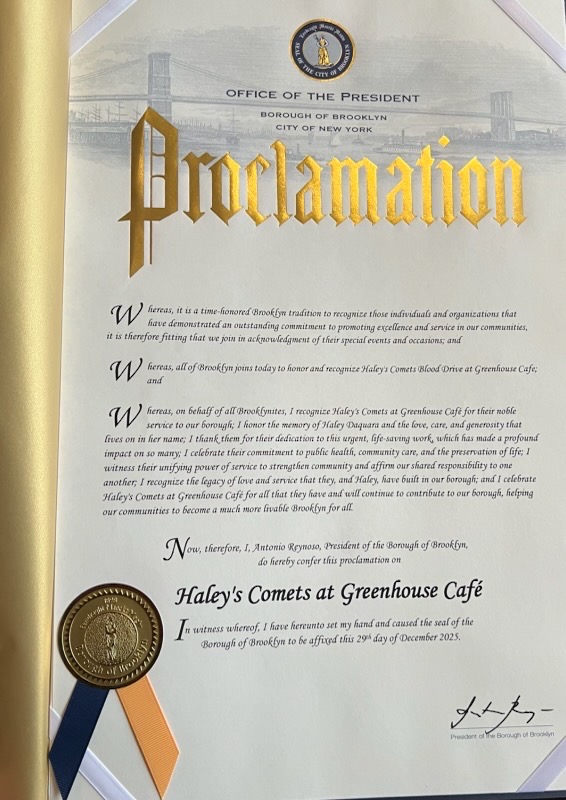
To further honor the dedication of “Haley’s Comets at Greenhouse Café,” Brooklyn Borough President Antonio Reynoso bestowed a special Proclamation reserved for individuals and organizations that have demonstrated an outstanding commitment to promoting excellence and service in the Brooklyn community.
Greenhouse Café has been a long-time partner of NYBC, hosting 81 blood drives and saving
15,000 lives since 2009. They have also participated in NYBC’s annual “Pint for a Pint” campaign, where all blood donors receive a voucher to redeem a free or discounted beverage at their local brewery or restaurant.
NYBC currently has just a three- to four-day supply of blood overall, leaving little margin for emergencies, severe weather, or sudden spikes in hospital demand. Supplies of O-negative, O-positive and B-negative blood are critically low, with only a one- to two-day supply on hand, and donors are urgently needed.