
What is Red Group Genotyping and Why is it Important?
A: Blood group genotyping (red cell genotyping, RBC genotyping) uses DNA analysis to determine which blood group antigens a person carries. Though most commonly used to ascertain the antigen status of red blood cells (red cell genotyping, RBC genotyping), assays for comprehensive platelet antigen profiles and neutrophil antigens are also available.
Unlike traditional serological testing that detects antigen expression on red blood cell surfaces, red cell genotyping examines the underlying genetic code. This is especially valuable for patients who have been recently transfused, have positive antibody screens, or when serological results are inconclusive.
NYBCe Continuing Education available (FREE P.A.C.E. credits)
- Just the Basics: DNA Testing: this is a 4-part series about molecular testing at an introductory level.
- Blood Group Genotyping: NYBCe has multiple courses on genotyping topics from basic to intermediate level.
How accurate is RBC genotyping compared to traditional blood typing?
A: Red cell genotyping is highly accurate, typically >99% concordant with serological results. RBC genotyping is particularly beneficial for testing patients with recent transfusions where donor red blood cells may interfere with serological testing. Additionally, RBC genotyping may be more accurate in cases of altered antigens that cannot be differentiated with routine serologic testing; in these cases, red cell genotyping can help to resolve complex antibody cases.
Access publications by NYBCe scientists addressing the accuracy of red cell genotyping:
When is red cell genotyping recommended?
- Recently transfused patients
- Patients with positive direct antiglobulin tests (DAT)
- Patients with warm autoantibodies requiring extensive antigen profiling
- Patients with sickle cell disease or thalassemia needing long-term transfusion support
- Patients whose red cells demonstrate spontaneous RBC agglutination
- Patients on monoclonal antibody therapy that interferes with serologic testing
- Complex antibody identification and distinguishing allo- from autoantibody
- Resolution of Rh typing discrepancies
- Resolution of ABO discrepancies
- Confirmation of weak or partial D phenotypes in women of childbearing age to guide RhIG administration and transfusion decisions
- Identification of antigen-negative donor units when antisera is limited
- Novel antigen or phenotype identification
- High throughput donor testing to build up an antigen-negative inventory
Access publications by NYBCe scientists addressing applications of red cell genotyping:
NYBCe Continuing Education available (FREE P.A.C.E. credits)
Blood Group Genotyping: NYBCe has multiple courses on genotyping topics from basic to intermediate level.
Is red cell genotyping FDA-licensed?
A: Yes, there are RBC genotyping platforms that are FDA-licensed. NYBCe genomics laboratories offer the Werfen HEA PreciseType BeadChip test that is FDA-licensed. In addition, we have in-house developed assays, including targeted Next-Generation Sequencing (NGS) for the RH blood group system and Sanger sequencing for most blood group genes. The results of FDA-licensed RBC genotyping platforms and our in-house assays intend to predict a RBC antigen profile in a patient or donor, and can provide valuable information, especially in cases of altered antigens, complex serologic reactivity, or antigen typing discrepancies.
Want to learn more about FDA-licensed RBC genotyping?
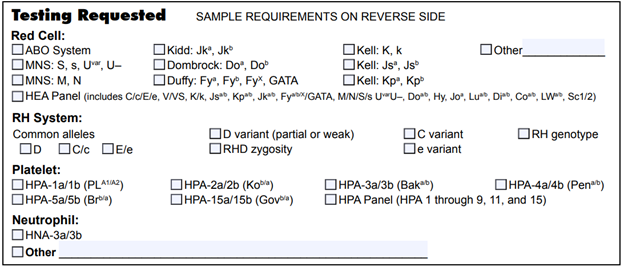
List of blood group genotyping assays available at NYBCe:
Are all red cell genotyping assays the same?
A: There are different methodologies utilized for RBC genotyping, and each has its strengths and limitations. NYBCe offers both high-throughput, FDA-licensed RBC genotyping and in-house developed assays, including targeted Next Generation Sequencing (NGS) and Sanger sequencing. Furthermore, the experts at NYBCe have a deep understanding of genomic testing and trusted algorithms to resolve complex cases.
List of blood group genotyping assays available at NYBCe:
Is RBC genotyping reimbursable?
A: Red cell genotyping is reimbursable and is rapidly becoming the standard of care for specific high-risk groups (patients with sickle cell disease, thalassemia, etc.) and patients with complex serologic problems (warm autoantibodies, highly alloimmunized, etc.)
How does RBC genotyping improve patient care in transfusion medicine?
A: Red cell genotyping improves:
- Antigen matching for chronically transfused patients (e.g., sickle cell disease)
- Identification of rare donors
- Resolution of antigen typing discrepancies
- Resolution of complex serologic antibody investigations
- Minimization of alloimmunization
- Management of pregnancies at risk for HDFN
Access publications by experts at NYBCe about the benefits of red cell genotyping:
What is the role of red cell genotyping in prenatal care?
A: RBC genotyping can:
- Avoid unnecessary RH immune globulin administration
- Contribute to the management of pregnancies with clinically significant maternal antibodies
- Determine fetal antigen status
- Determine paternal zygosity to predict fetal/offspring antigen status
Access publications by NYBCe scientists about RBC genotyping to improve prenatal care:
Can red cell genotyping replace serology?
A: Red cell genotyping does not replace serology. Serology is routinely used for ABO testing and antibody detection and identification. Serology is also utilized for urgent or immediate antigen typing. RBC genotyping improves transfusion medicine by complementing serology.
Why choose NYBCe for blood group genotyping needs?
A: NYBCe has been at the forefront of blood group genotyping for decades, supported by state‑of‑the‑art technology and deep scientific expertise. We have extensive experience working with challenging samples, variant alleles, and emerging discoveries. Our renowned immunohematology reference laboratories provide the advanced serologic testing needed to complement red cell genotyping in complex cases, and our subject matter experts offer specialized consultation to support clinicians and laboratories. NYBCe is also a leader in delivering ongoing, open‑access continuing education on RBC genotyping at no cost.
List of blood group genotyping assays available at NYBCe:
NYBCe Continuing Education available (FREE P.A.C.E. credits) on RBC genotyping:
- Just the Basics: DNA Testing: this is a 4-part mini-series about molecular testing at an introductory level.
- Blood Group Genotyping: NYBCe has multiple courses on genotyping topics from basic to intermediate level
Does NYBCe offer educational programs and content on red cell genotyping?
A: NYBCe is the leader in providing ongoing, open-access transfusion medicine continuing education at no cost. Several hours of programming on RBC genotyping are offered annually. From beginner to advanced level of instruction, these programs are useful for clinicians, fellows, residents, blood bank medical laboratory scientists, students, and anyone interested in learning more about blood group genotyping.
NYBCe’s highly-regarded webinars, the Essentials of Transfusion Medicine Webinar Series, Experience in Blood Banking, and Lab Week with NYBCe, all include NYBCe experts presenting on RBC genotyping topics. Additionally, for on-demand, interactive programs, there are multiple eLearning in Transfusion Medicine courses that focus on red cell genotyping.
NYBCe Continuing Education available (FREE P.A.C.E. credits) on RBC genotyping:
- Just the Basics: DNA Testing: this is a 4-part mini-series about molecular testing at an introductory level.
- Blood Group Genotyping: NYBCe has multiple courses on genotyping topics from basic to intermediate level
What is the future of blood group genotyping?
A: The future of blood group genotyping is moving toward faster, more accurate, and more comprehensive DNA‑based testing that will significantly improve transfusion safety and personalized medicine. Modern high‑throughput genotyping high-density arrays are becoming central to transfusion medicine. In contrast to the FDA-licensed red cell genotyping arrays interrogating <30 markers, these latest platforms can analyze thousands of variants and samples quickly and help match blood products more precisely—especially for patients with rare blood types or complex antibody profiles. Next‑generation sequencing will play a major role in the future of blood group typing, as it can detect rare, novel, or complex variants that traditional serology or PCR‑based methods may miss. This allows for more accurate prediction of red cell antigens and better donor–recipient matching.
Access publication by NYBCe experts about the future of blood group genotyping:
Blood Group Genotyping of Donors
What are the benefits of red cell genotyping blood donors?
A: Routine red cell genotyping of blood donors can provide an effective strategy to build up an inventory of antigen-negative units for blood centers and Immunohematology Reference Laboratories (IRLs). Red cell genotyping is a high-throughput, low-cost, and FDA-licensed solution to shortages of antigen-negative units. Results can be directly uploaded into Blood Establishment Computer Systems (BECS, eliminating manual entry and human error. This also represents savings of expensive commercial antisera for serologic testing, along with reducing workload in an atmosphere of chronic staffing shortages.
Access publications by NYBCe scientists addressing donor genotyping:
Can donor red cell units be labeled as antigen-negative from red cell genotyping results?
A: Yes, when antigen profiles are acquired using an FDA-licensed red cell genotyping platform, donor units can be labeled as antigen-negative using only DNA testing results. Furthermore, donor units can be labeled using historical typing results if the donors have been genotyped twice with concordant results.
Can donor RBC genotyping results transfer electronically into our Blood Establishment Computer System (BECS)?
A: Yes, electronic transfer of donor red cell genotyping results is available. This is important to reduce staffing time and clerical errors associated with manual entry of large amounts of data.
How are rare donors identified with RBC genotyping?
A: FDA-licensed red cell genotyping platforms provide antigen prediction for dozens of antigens, including several high prevalence antigens. Through large scale donor screening, blood centers inevitably identify donors with rare phenotypes that would otherwise have been undiscovered. These can be donors whose red blood cells lack the expression of a high prevalence antigen or donors with uncommon antigen combinations. It is important to identify units from donors with rare phenotypes so that units can be preserved for transfusion to patients with antibodies or rare blood needs.
Can donors be genotyped for platelet antigens?
A: Yes! There are platelet genotyping platforms that predict the most clinically relevant Human Platelet Antigens (HPA). HPA-typed donors can help blood providers support patients in cases of Fetal/Neonatal Alloimmune Thrombocytopenia (FNAIT), Post-Transfusion Purpura (PTP), and in some cases, platelet refractoriness.
RH Genotyping
What is RH Genotyping?
A: RH genotyping is DNA-based testing used to determine a person’s Rh blood type by analyzing the genes that encode the Rh antigens on red blood cells. Instead of relying only on traditional serologic (antibody‑based) testing, Rh genotyping looks directly at the genetic sequence to identify whether someone carries the genes for important Rh antigens—most notably D, C, c, E, and e.
This method is especially useful when standard blood typing is unclear, when variants of the RHD gene are present, or when precise Rh matching is needed for transfusion or pregnancy care. Because the Rh system is genetically complex and the expression of variant antigens may affect a person’s risk of making antibodies, DNA testing provides a more accurate and detailed picture of a person’s Rh type.
NYBCe Continuing Education available (FREE P.A.C.E. credits) on RH genotyping:
- Blood Group Genotyping: NYBCe has multiple courses on genotyping topics from basic to intermediate level
What are common applications for RH Genotyping?
A: RH genotyping is recommended for:
- Patients with sickle cell disease or thalassemia needing long-term transfusion support
- Complex antibody identification and distinguishing allo- from autoantibody
- Resolution of Rh typing discrepancies
- Confirmation of weak or partial D phenotypes in women of childbearing age to guide RhIG administration and transfusion decisions
Access publications by NYBCe experts on RH genotyping:
What is RHD zygosity testing?
A: RHD zygosity testing is a DNA‑based test that determines whether a person who is Rh‑positive carries one or two copies of the RHD gene. This is particularly important in pregnancy care, as it helps to assess the risk of hemolytic disease of the fetus/newborn (HDFN) by determining whether an Rh-positive parent can have an Rh-negative baby. In cases of variant or weak D expression, zygosity testing helps resolve unclear serologic results. Generally, RHD zygosity testing supports more accurate D classification of donors and patients.
What information is included on RH genotyping reports?
A: A typical RH genotyping report will contain: Assay(s) utilized Alleles detected, including genetic variants and predicted amino acid change Predicted phenotype Alloimmunization risk
Does NYBCe offer educational programs and content on RH genotyping?
A: NYBCe is the leader in providing ongoing, open-access transfusion medicine continuing education at no cost. Several hours of programming on RH genotyping are available.
NYBCe Continuing Education available (FREE P.A.C.E. credits) on RH genotyping:
- Blood Group Genotyping: NYBCe has multiple courses on genotyping topics from basic to intermediate level
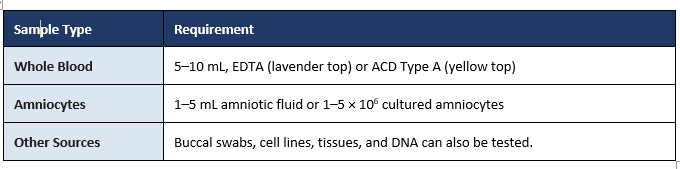
Sample Requirements
Please review the specimen requirements below before submitting samples for testing. Submissions that don’t meet these requirements may be rejected or delayed.
Restrictions
- Lithium heparin tubes are not acceptable for testing.
- Leukoreduced samples do not yield acceptable DNA quantities for testing.
Questions
Contact us for guidance on specimen volumes or types not listed here.